
Patrol Officer Courses
Advanced Search and Seizure
Search and Seizure case law is consistently changing in the United States and this directly impacts law enforcement officers’ ability to legally conduct searches during criminal investigations, pedestrian encounters, and traffic stops. This one day training course will provide officers the most up-to-date court rulings impacting search and seizure. Officers will not only get a refresher on the 4th Amendment and search warrant exceptions, a practical application will be applied. Real world scenarios will be presented in class to encourage discussions. Often times, classes become divided on whether an example was a “good search or bad search.” Read More...
Patrol Officer Drug Investigations

Drug-related crimes are impacting every community across the United States. Law enforcement agencies devote a tremendous amount of resources to combat illegal narcotic activity. Uniform patrol officers are in a prime position to target drug offenders. From the drug addict, to the upper-level dealers, patrol officers must be prepared to handle these unpredictable criminals.
There are various techniques and tactics that patrol officers can utilize to
be more effective at arresting drug violators. The officers must be familiar with basic drug identification as well as search and seizure case law. Knock & Talk operations, when conducted
properly, can be a very successful tactic to combat illegal narcotic trafficking. Officers must receive proper training and understand the limitations of knock & talks in order for this tactic to
be effective. All too often, drug dealers are arrested, prosecuted, and found "not guilty" due to poor report writing or
officer testimony in court. Read More...
Police and Minority Relations
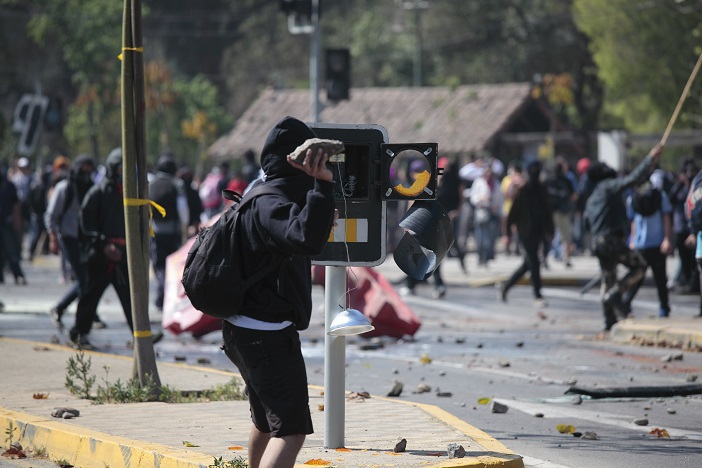
POLICE LIVES MATTER, BLACK LIVES MATTER, ALL LIVES MATTER. Those phrases have become outcries for police officers, community members, and mainstream media in 2015. In reality, tensions between law enforcement and minorities have been brewing for decades. Now more than ever, police officers must learn to balance aggressive crime fighting strategies with an understanding that their actions may be perceived as racial profiling, civil rights violations, criminal offenses, or as mistreatment of citizens in the communities they are sworn to protect and serve. Read More...
Spanish for Patrol & Interdiction
Spanish for Patrol and Interdiction is a course designed as a basic introduction to the Spanish language. This course will help officers improve communication between officers and Hispanic citizens and suspects. Common drug-related Spanish terminology will be covered in great detail. One of the greatest communication barriers between police officers and Hispanic suspects is the failure of the suspects to understand commands, which creates an safety hazard. The course will present simple commands that can be easily remembered to take control of a situation. Numerous videos will be displayed and officers will participate in role-playing exercises. Read More...
Tactical De-escalation Techniques
Across the United States, police departments spend countless hours training officers on the use of force involving simple wrist locks and pressure points; chemical agents and physical strikes; and progressing to impact weapons and firearms. While this type of training is absolutely critical for all law enforcement officers, agencies must provide proper “Tactical De-escalation Techniques” to officers as well.
In recent years, the Department of Justice (DOJ) has entered into “Consent Decrees” with numerous agencies. As part of the consent decree, the DOJ requires agencies to train all of their officers in the use of de-escalation. Read More...

 Print
Print 